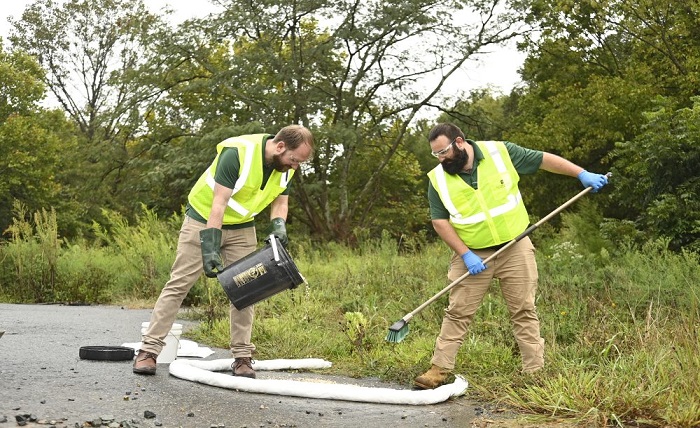
Industrial operations are vital to our economy, but they can pose a significant threat to our environment. For facility and operations managers, the challenge is twofold: maintaining productivity while protecting our precious waterways from contamination. This isn’t just an ethical responsibility; it’s a legal and financial imperative, enforced by strict environmental regulations.
The scale of the problem is staggering. A 2023 report found that just 81 U.S. refineries discharged 1.6 billion pounds of pollutants into waterways in 2021 alone. This highlights a critical vulnerability in many industrial wastewater streams. For managers on the ground, preventing even a small discharge of oil, fuel, or other hydrocarbons can feel like a constant battle.
Fortunately, there is a proven solution. High-performance oil water separator systems are a critical technology designed to meet this challenge head-on. They are the frontline defense for achieving environmental compliance, mitigating financial risk, and safeguarding the natural resources we all depend on.
Key Takeaways
- Oil water separators are legally mandated by regulations like the Clean Water Act and are crucial for any facility’s Spill Prevention, Control, and Countermeasure (SPCC) plan.
- Failure to comply with wastewater discharge regulations can result in severe financial penalties, operational shutdowns, and significant reputational damage.
- Different types of separator systems, such as Above Grade and Below Grade, exist to meet specific site requirements, from wastewater flow rate to the available installation footprint.
- Investing in a performance-proven system ensures effective hydrocarbon removal, protects the environment, and provides long-term operational reliability.
The High Cost of Contamination: Environmental and Regulatory Imperatives
Failing to properly manage oily wastewater isn’t just an environmental issue—it’s a significant business risk. Understanding the potential consequences clarifies why effective water treatment is not an optional expense but a core operational necessity.
Why Clean Water Matters: The Environmental Impact
Even a small amount of oil can have a devastating impact on aquatic ecosystems. Hydrocarbons can coat the gills of fish, suffocate aquatic insects, and destroy the insulating properties of fur and feathers on mammals and birds. These contaminants can also settle into sediment, persisting for years and poisoning the local food chain.
When these pollutants enter groundwater, they can contaminate drinking water sources, posing a direct risk to human health. The cost and complexity of remediating a contaminated site far exceed the investment in preventing pollution at its source. Deploying an oil water separator (OWS) is a proactive measure of corporate environmental stewardship, demonstrating a commitment to protecting the community and the environment.
Navigating the Law: The Clean Water Act and SPCC Rules
Federal regulations provide a clear legal framework for water pollution control. The U.S. Environmental Protection Agency’s (EPA) Clean Water Act makes it illegal to discharge any pollutant from a point source into navigable waters without a permit. For facilities that handle oil, the rules are even more specific.
The EPA’s Spill Prevention, Control, and Countermeasure (SPCC) rule requires facilities to develop and implement plans to prevent oil discharges. This often involves installing equipment like oil water separators to provide secondary containment and treat potentially contaminated runoff or process water.
The consequences of non-compliance are severe, including steep fines, legal action, and even operational shutdowns. Enforcement is a reality; data shows that almost 83% of U.S. refineries reported violating their water pollutant permit limits between 2019 and 2021. This demonstrates that regulators are actively monitoring discharge and that having a reliable OWS is essential for staying compliant.
Selecting the Right System for Your Facility
Once you understand the need for an OWS, the next step is choosing the right design for your facility’s unique operational demands. This decision involves several key factors that determine the system’s effectiveness and long-term reliability.
Key Considerations: Flow Rate, Environment, and Application
To ensure proper performance, you must match the separator to your specific needs. Key factors to consider include:
- Flow Rate (GPM): The system’s capacity, measured in gallons per minute (GPM), must be able to handle your facility’s peak wastewater output. An undersized separator will be overwhelmed, leading to poor treatment and potential compliance violations.
- Installation Environment: The physical location dictates the required configuration. An indoor vehicle wash bay may need a compact, below-grade unit, while a manufacturing plant’s outdoor process water stream might be better served by an easily accessible above-grade model.
- Type of Oil: Standard oil water separators are designed for non-emulsified hydrocarbons. If your process creates chemically emulsified oils, additional treatment steps may be necessary.
These systems are not one-size-fits-all. They are engineered in various configurations to handle different flow rates and site constraints. Understanding the key differences between various high-performance oil water separator systems is fundamental to ensuring both compliance and efficiency.
Common OWS Configurations
Separators are typically available in three main configurations to suit nearly any application:
- Above Grade Separators: These units are installed on a concrete pad or other stable surface. Their primary advantage is ease of access for inspection and maintenance, making them ideal for equipment rooms, indoor process areas, and locations where excavation is not feasible.
- Below Grade Separators: Designed for burial, these systems are perfect for outdoor applications, parking lots, vehicle maintenance facilities, and areas with limited space. They can be engineered for deep burial or with drive-over lids for high-traffic areas.
- Flush-With-Grade Separators: This design offers a hybrid solution. The main tank is installed below ground, but access points for maintenance and inspection are flush with the surface, providing a space-saving installation without sacrificing serviceability.
Many systems can be enhanced with accessories like oil stop valves, which automatically prevent a major spill from exiting the separator, and integrated skimmers that simplify the oil removal process.
Who Needs an Oil Water Separator?
The need for effective oil water separation technology spans a wide range of industries. The common thread is any facility where hydrocarbons could potentially mix with water and enter a drainage system, whether from rainfall runoff, equipment wash-downs, or industrial processes.
A Critical Tool Across Industries
The following industries commonly rely on oil water separators to maintain environmental compliance and prevent pollution:
| Industry Sector | Common Applications |
|---|---|
| Automotive & Transport | Vehicle maintenance shops, car washes, airports, rail yards, fueling stations |
| Manufacturing & Energy | Power plants, petroleum refineries, industrial manufacturing sites, oil and gas fields |
| Military & Government | Military vehicle maintenance facilities, municipal garages, transportation depots |
Essentially, if your operations involve vehicles, heavy equipment, petroleum storage, or industrial machinery, an oil water separator is a necessary component of your environmental management plan.
Conclusion: A Commitment to Protection and Performance
Protecting our environment with high-performance oil water separator systems is a matter of both ecological responsibility and smart business practice. These systems are the critical line of defense for preventing hydrocarbon pollution, allowing facilities to avoid costly fines, adhere to regulations like the Clean Water Act, and demonstrate a tangible commitment to corporate stewardship.
Ultimately, investing in a correctly specified and well-maintained OWS is not just an expense. It is a crucial investment in your facility’s operational resilience, regulatory standing, and environmental legacy. We encourage all facility managers to proactively assess their wastewater treatment needs, ensuring they are prepared for regulatory scrutiny and are actively protecting our shared water resources for generations to come.