
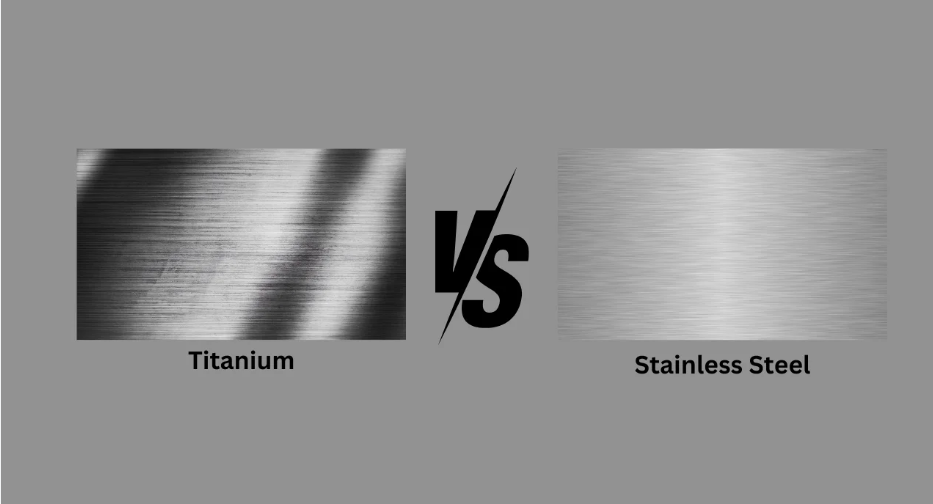

Is titanium stronger than steel? Explore their differences, strengths, and uses, like in a titanium cutting board, to see which metal suits your needs best.
When choosing materials for heavy-duty applications, the question “Is titanium stronger than steel?” arises quite frequently. Both are durable metals that do one thing better than the other, hence optimal for one purpose over the other. While aerospace parts to everyday items, such as a titanium cutting board, understanding what each does best assists you in choosing the right one for the job. Titanium is famous for its lightness and corrosion resistance, while steel is the favorite due to its strength and affordability. But who is actually stronger?
This post demystifies the disparity between titanium and steel for you, contrasting their strength, weight, and applications in the real world. We’ll discuss why the metals are a favorite in kitchens and elsewhere, and by the end of it, you’ll be able to determine which metal best suits your requirements—whether designing a rocket or chopping vegetables. Let’s get into the science and practical aspects of these powerhouse metals.
Understanding Metal Strength
In order to ascertain if titanium is stronger than steel, first, we need to understand what “strength” is. Strength in materials science can be understood differently:
-
Tensile Strength: A Measure of the force that a material can withstand before it fractures when it is stretched.
-
Yield Strength: The point at which a material starts deforming irreversibly.
-
Hardness: Resistance to scratching or denting.
-
Toughness: Ability to resist energy without fracturing.
Steel, particularly high-strength alloys like stainless or carbon steel, tends to exhibit higher tensile strength than titanium. For example, some steel alloys may reach tensile strengths of 1,000–2,000 MPa (megapascals), while pure titanium is around 240–550 MPa, and even strong alloys like Ti-6Al-4V get only up to around 900–1,200 MPa. So, in sheer pulling strength, steel tends to win.
But. Titanium is better in additional respects. Its strength-to-weight ratio is improved, so it’s nearly as strong as some steels but lighter. This suits it for use in situations where weight is an issue, like airplane wings or a titanium cutting board that’s light enough to pick up in the kitchen. Titanium also resists corrosion better, and it can handle challenging environments where steel will corrode.
So is titanium stronger? It depends on the situation—steel can be stronger absolutely, but titanium’s combination of strength, lightness, and endurance often renders it the preferred option.
Titanium vs. Steel: Breaking Down the Properties
Let’s pit the two metals against each other to find out where they compare:
-
Weight: Titanium is roughly 40% lighter than steel. A titanium cutting board, for example, feels bearable despite its resilience, unlike heavier steel options.
-
Corrosion Resistance: Titanium is nearly rust-proof, working well in damp or salty conditions. Steel, of course, being non-stainless, easily corrodes without coatings.
-
Strength-to-Weight: Titanium’s benefit in this area is why it’s used in airplanes. It offers nearly steel’s strength at half the weight (4.5 g/cm³ vs. steel’s 7.8 g/cm³).
-
Hardness: Steel is typically harder, more resistant to scratches. Titanium can have surface scratches, but it does not become weaker.
-
Cost: Steel is cheaper and more prevalent. The exorbitant price of Titanium reflects its complexity of mining and processing.
For everyday use, like a titanium cutting board, these traits provide a light, corrosion-resistant surface that is easy to clean and resistant to holding bacteria, unlike certain steels that will rust if not properly maintained.
Real-World Applications: Where Each Metal Excels
Both possess their niches, depending on their respective properties.
-
Aerospace: Titanium’s strength and light weight make it ideal for the turbine blades and airframes, where even an ounce of unnecessary weight counts. Steel’s raw strength is best suited for heavy equipment, bridges, and construction, where sheer strength and economy are essential.
-
Medical World: Biocompatibility of titanium—i.e., it does not harm the body—is shown to be ideal for implants like hip replacement. Steel is used in surgical tools, but needs special alloys so that it does not corrode.
-
Kitchen: A titanium cutting board accents the functional aspect of the metal. Its surface is not porous and will not stain or become germ-prone, and its lightness makes it easy to maneuver compared to a heavy steel board.
-
Consumer Goods: Titanium appears in watches, bikes, and even knives, where corrosion resistance and aerodynamic shape are bonus features. Steel dominates tools and knives, where hardness and cost are the primary considerations.
The choice is according to the job: titanium for reducing weight, steel for brute strength.
Titanium Cutting Boards: A Practical Example
Let’s take a closer look at the titanium cutting board as a way to see titanium’s strengths in action. These boards are gaining more and more popularity for a reason. They’re tough enough to keep up with daily chopping without the deep scrapes, much like the use of titanium in high-stress use. Their non-porous structure allows no absorption of juices or odors, so they’re cleaner than wood or some plastics. And most of them are dishwasher-safe, a real plus for time-conscious cooks.
In comparison to steel, a titanium cutting board is lighter, so it’s simpler to transport around the kitchen. Steel boards, though durable, can be heavy and rust if not well dried. Titanium’s resistance to corrosion means it remains in perfect condition even after years of wear, just like a steel tool requires careful maintenance to keep it sharp.
Titanium cutting boards are the obsession of enthusiasts who love the knife-friendly surface—hard enough to resist wear and tear but soft enough not to dull blades at lightning speed. They’re non-toxic too, so no toxic chemicals seep into food. More costly than plastic, they’re worth their weight in gold over the long run, since a quality tool is always better than a cheap throwaway.
Myths About Titanium and Steel Strength
There are some myths regarding titanium and steel, so let’s get rid of a couple of myths:
-
Myth 1: Titanium is stronger than steel at all times. → No such occurrence. Steel tends to have higher tensile strength, but titanium is stronger by weight.
-
Myth 2: Titanium is indestructible. → It’s tough, but it scratches or gets dented with extreme pressure. Steel is tougher in this aspect.
-
Myth 3: Steel is always heavier. → True for the most part, but there are steel alloys that have been made lighter, but they sacrifice something else.
How to Choose Between Titanium and Steel
It’s between the two, depending on what you need:
-
Weight-Sensitive Applications: Employ titanium.
-
High-Strength Applications: Steel is the winner.
-
Corrosion Issues: Titanium is your best bet.
-
Budget: Steel is less expensive.
In domestic use, a titanium cutting board might have an advantage over steel because of convenience and hygiene, but in professional kitchens, steel’s longevity might be preferable if weight isn’t an issue.
Testing Strength in Real Life
Eager for strength in application?
In lab tests, steel’s higher tensile strength enables it to withstand more pulling force before it fractures. However, titanium’s toughness manifests in fatigue tests—it withstands stress repetition without cracking.
In actuality, try this: a titanium item will be lighter when picked up and won’t rust even if it’s left damp. Steel will be more substantial, but has to be dried out to keep from corroding unless it’s stainless.
Environmental and Cost Considerations
Titanium mining and refining are energy-intensive, making it pricier and less eco-friendly upfront. However, its recyclability and long lifespan—like in a durable titanium cutting board—offset this over time.
Steel is easier to produce and recycle, with a lower initial cost, but non-stainless types require coatings or maintenance to prevent rust.
The Future of Titanium and Steel
Both metals will continue to be necessary in the future. Titanium is being used more in electric vehicles, alternative energy, and medical devices as its lightweight strength increases its applications. Steel, with new low-weight, high-strength alloys, will remain a pillar for infrastructure.
Why This Question Matters
Requesting “Is titanium stronger than steel?” is not just hypothetical—it’s about making practical choices.
Titanium is not necessarily stronger overall, but its tailored balance makes it number one in some applications. Steel’s sheer strength makes it king where raw power determines the outcome.
Final Tips for Choosing
If you’re eyeing a titanium cutting board, look for food-grade certifications to ensure safety. For other applications, check alloy specs—Ti-6Al-4V for titanium or 316 stainless for steel—to match your needs.
Both metals are champions, but titanium’s edge in weight and corrosion resistance makes it a standout for modern, practical uses like kitchen tools.
Wrapping It Up
Therefore, is titanium stronger than steel? Steel gets the award for plain and simple strength, but titanium’s lighter weight and durability take the crown in most scenarios. From a cutting board made of titanium to airplane components, its attributes surpass those of steel, where it cannot. Choose based on what you need—strength, weight, or resistance—and you can’t go wrong.
Explore titanium or steel products for your upcoming project or kitchen remodel, and enjoy the benefits of materials built to last.