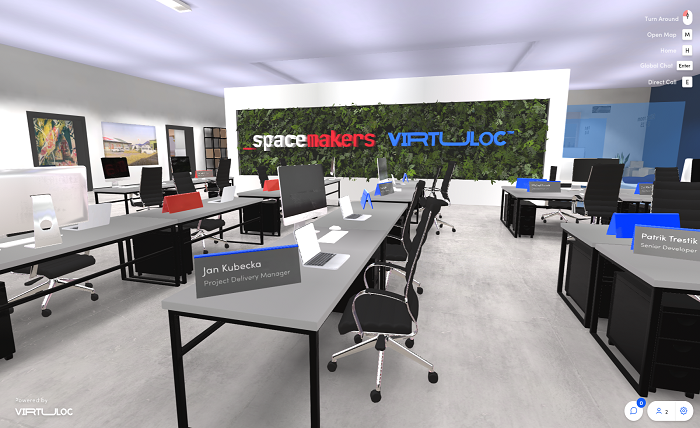
The way businesses operate has changed forever.
Remote work is not a phase — it’s the new normal. 79% of remote-eligible employees work in hybrid or fully remote capacities as of early 2025, according to tracking data from Gallup. That’s a huge transformation in how teams collaborate, how companies scale, and even what it means to have a street address.
And here’s the problem…
Even most remote workers still require a professional front. They need somewhere for mail to get sent, a business phone number, and something to tell clients that they aren’t operating out of their parents’ basement. A virtual office provides all that.
A virtual office offers you a professional address, mail handling services, phone services and meeting rooms — all without leasing physical space. It’s one of the most intelligent, affordable resources you can offer remote teams today.
If you’re conducting business nationwide in the south, a virtual office in Houston provides remote teams with a reputable virtual address in one of the U.S.’ fastest growing business cities — without ever having to set foot in a physical office.
Pretty clever, right?
What Is a Virtual Office?
A virtual office provides your business with a professional commercial address and a suite of office-support services. It’s not a PO box. A virtual office provides a real street address at an actual physical location with people who can handle your mail, calls and visitors for you.
Here’s what a typical virtual office package includes:
- A registered commercial business address
- Mail handling, scanning, and forwarding
- A dedicated business phone number with call answering
- Access to on-demand meeting rooms and conference space
- A virtual receptionist for professional call handling
It’s an all-in-one professional business identity — for much less than a traditional office.
Why Remote Work Is Here to Stay
The numbers make the case on their own.
As of August 20th, there were about 34.6 million employed Americans who worked from home, Bureau of Labor Statistics show. Plus, 66% of organizations offered workplace flexibility in 2025. These stats aren’t pandemic remnants — remote work is here to stay.
And what that means for businesses could not be simpler. The traditional office – long leases, assigned desks, a central location – is rapidly becoming a luxury few can afford. The virtual office plugs that gap, seamlessly providing businesses the professional tools they need.
Businesses are already transitioning, and Wall Street is taking note. The market for remote workplace services is expected to expand from $20.1 billion this year to $58.5 billion by 2027.
How a Virtual Address Builds Real Credibility
Here’s where most remote businesses run into trouble…
Working from home is fine. Operating a business from home isn’t. While you can get away with working at home, using your home address for business: exposes you professionally, gives away your personal information and can deny you from utilizing services.
A virtual address fixes all of that immediately.
Clients and partners see a commercial street address, not a residential one. That one small shift can accomplish a lot. It increases credibility (businesses are expected to have commercial addresses). It maintains privacy (your home address remains off public-facing documents). And it enables services that may have been restricted (many business banks won’t open an account without a commercial address).
Why does this matter? Well, particularly for startups and small businesses. Competing with billion-dollar brands is tough enough. But when you add a professional virtual address to your repertoire, you level the playing field quickly.
The Key Benefits for Remote Teams
A virtual office isn’t just a mail address. It enhances how distributed teams work every day.
Mail and Communication Management
Remote teams spread out over cities and timezones need one place to receive all business mail. A virtual office provides one professional address to centralise everything. Mail can be scanned and emailed, forwarded or held for pick-up — whatever suits you.
Access to Meeting Rooms When Needed
Most virtual office providers include the ability to reserve meeting rooms & conference facilities on demand. Teams only pay when they need space — no long term lease requirements but the capability to still hold a professional client meeting with little lead time.
Professional Phone Handling
A virtual office provides you with your own business phone number and professional receptionist services. Calls are answered, messages routed and nothing is missed — anytime, day or night. Imagine having a front desk…without the overhead.
How Virtual Offices Fuel Business Growth
A virtual office shouldn’t just be thought of as saving money. It’s also a legitimate business growth vehicle.
Growing into new markets is quick and inexpensive. With a virtual address, you can plant your business flag in a new city in just days — not months. No lease to sign. No build-out to coordinate.
Local SEO significantly improves. Businesses advertising a local commercial address are much more likely to appear in Google local search results for that city or region. A virtual address allows remote businesses to legitimately claim local search presence.
Stay lean as you scale. There are no multi-year lease commitments. You can scale a virtual office up or down as your business demands. The virtual office market is projected to reach $30.1 billion by 2031.
Hire without location restrictions. If geography doesn’t matter for the job, you can hire purely on qualification. Team members can be remote.
The Bottom Line on Virtual Offices
Virtual offices and virtual addresses are no longer the “startup hack” of yesteryear. Businesses of all sizes use virtual office services as a core component of their operations. From slimming down operations to looking more professional to expanding into new markets, virtual offices are a legitimate way for businesses to run leaner and faster. Remote work is not going away anytime soon — and the companies who build a legitimate presence without brick and mortar will be ready.
The upside is real. The cost is low. And the professional impact is immediate.
Frequently Asked Questions
What is a virtual office?
A virtual office provides businesses with a commercial address, mail handling services, phone answering services, and meeting space. The business utilizing these services will not have a permanent full-time physical office location.
What is a virtual address?
A virtual address is a legitimate street address for receiving mail and conducting business — for marketing, registration and branding purposes — where the business does not physically operate from that location on a day-to-day basis.
Who benefits most from a virtual office?
For Startups, Distributed Teams, Freelancers, and Growing Businesses looking to have a professional presence without leasing physical office space.
Is a virtual office address legitimate for business registration?
Yes, generally speaking. A virtual office provides an actual commercial address which can be used to register your business, open a bank account and use for professional correspondence. Some variations may apply depending on location and type of business.